Quick Takeaways
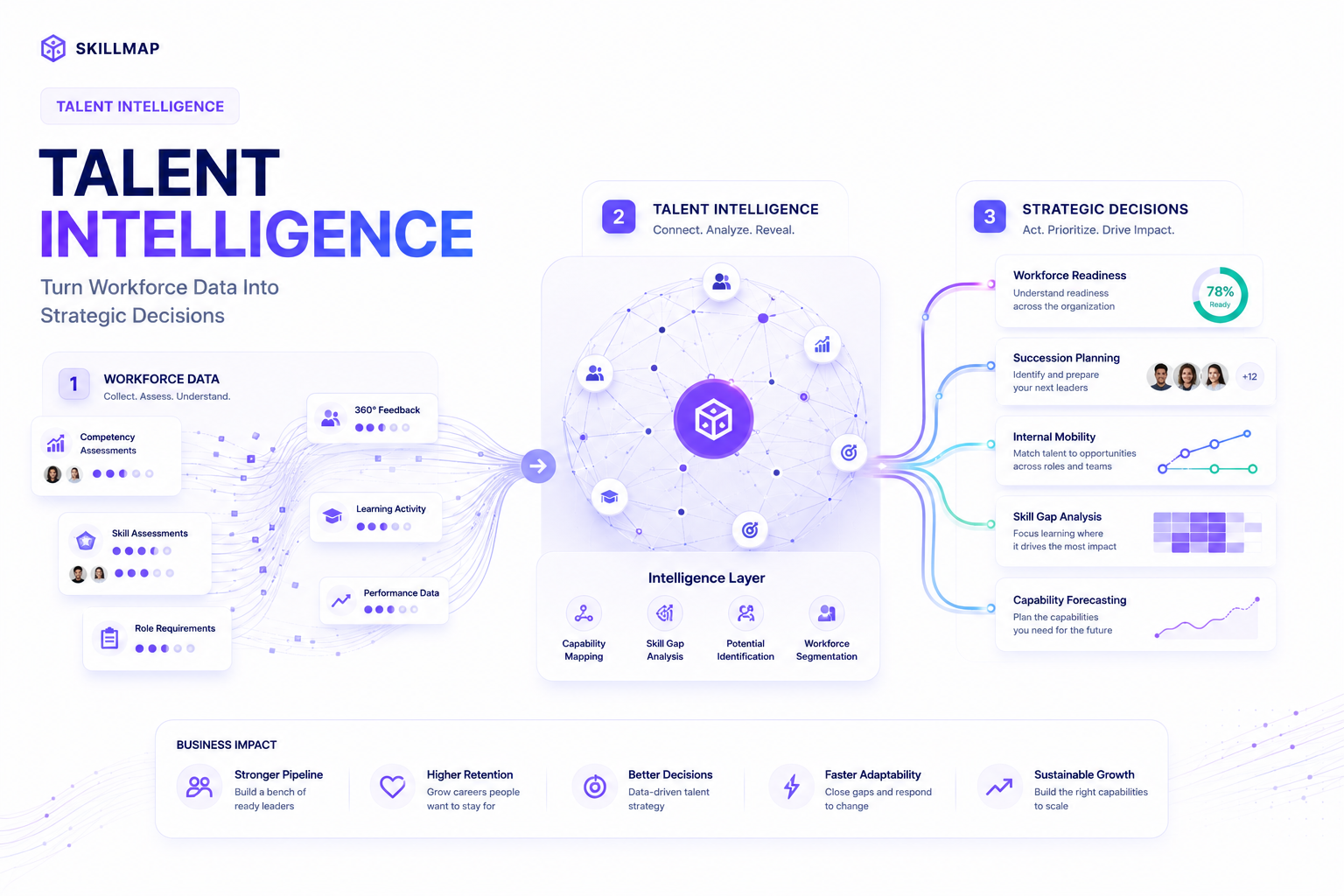
Talent Intelligence is the ability to collect, analyze, and use workforce capability data to make better talent and business decisions.
- Competency Assessment creates data; Talent Intelligence turns data into decisions.
- Talent Intelligence improves Talent Visibility and Workforce Readiness.
- Organizations can make more informed decisions about development, mobility, and succession.
What Is Talent Intelligence?
Most organizations already collect talent data.
Some use performance reviews.
Others use competency assessments.
Some implement 360-degree feedback programs.
However, after the assessments are completed, many leaders face the same question:
What should we do with all this data?
This is the point where Talent Intelligence begins.
Competency Assessment creates data.
Talent Intelligence transforms that data into actionable decisions.
 Talent Intelligence helps organizations turn workforce data into actionable decisions about development, succession, and workforce planning.
Instead of simply knowing an employee’s assessment score, organizations can understand:
- Where workforce strengths exist
- Which capabilities are missing
- Who is ready for future roles
- Which positions face succession risks
- Whether the organization is prepared for future growth
Why Competency Assessment Alone Is No Longer Enough
For many years, organizations viewed competency assessment as the final objective.
In reality, assessment is only the starting point.
Imagine a company that has just completed competency assessments for 200 employees.
The outcome includes:
- Hundreds of competency scores
- Thousands of data points
- Multiple reports and dashboards
Yet months later:
- No development plans exist
- Skill gaps remain unclear
- Succession risks are unidentified
- Internal mobility opportunities are missed
The organization possesses data but gains little business value.
The challenge is not data collection.
The challenge is transforming data into decisions.
The Evolution From Competency Assessment to Talent Intelligence
Many organizations follow a similar maturity journey.
| Stage | Primary Objective |
|---|---|
| Competency Assessment | Measure workforce capabilities |
| Skill Gap Analysis | Identify capability gaps |
| Career Pathing | Define development opportunities |
| Internal Mobility | Utilize internal talent effectively |
| Talent Intelligence | Enable strategic talent decisions |
Talent Intelligence does not replace competency assessment.
It extends its value.
The focus shifts from measuring capabilities to understanding how capabilities impact business outcomes.
The Talent Visibility Problem
When organizations are small, leaders typically know every employee personally.
As companies grow to 100, 200, or 500 employees, that visibility begins to disappear.
Many leaders struggle to answer questions such as:
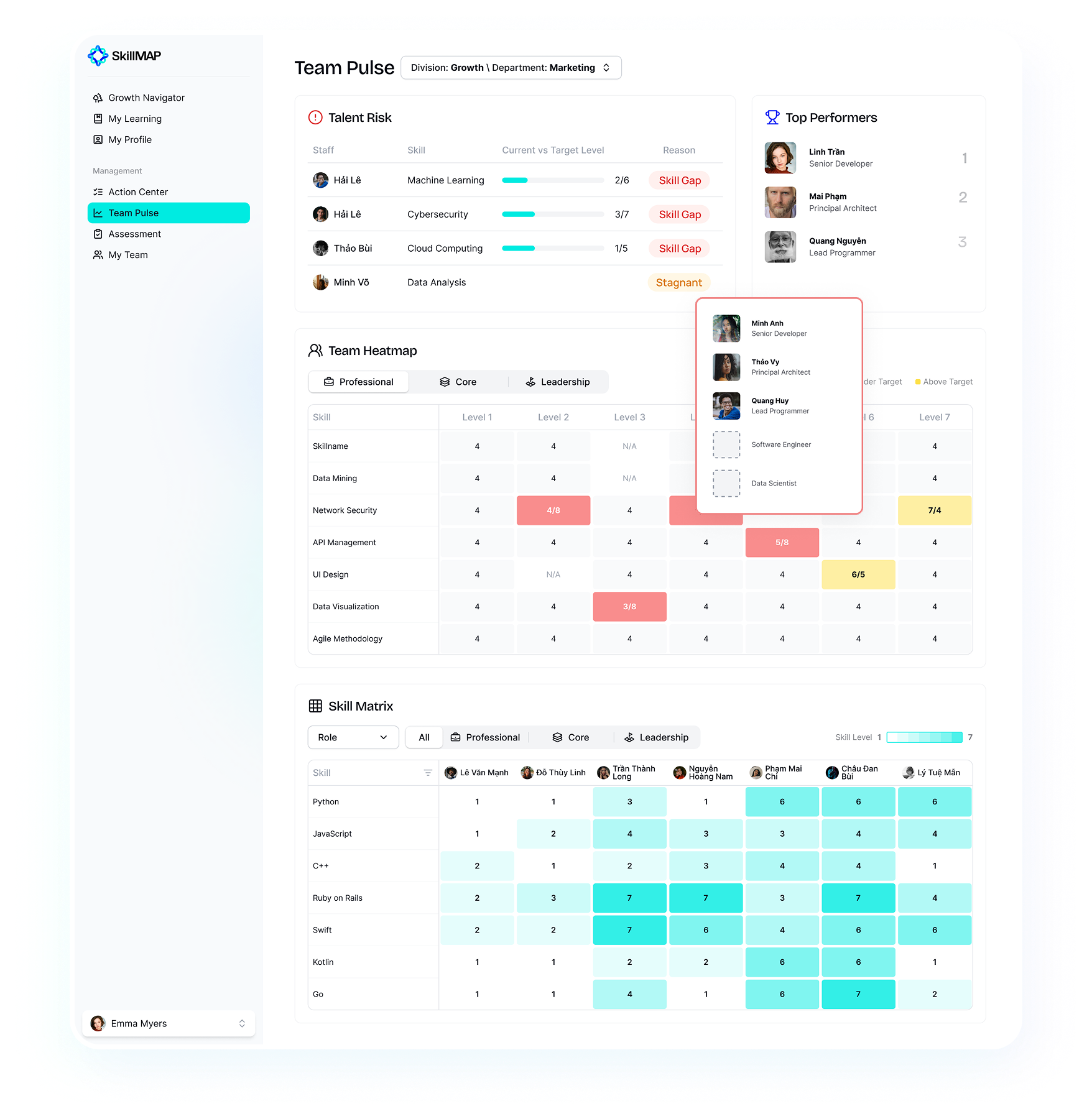
- Who has leadership potential?
- Who could succeed in a more senior role?
- Which teams lack critical capabilities?
- Where are key skills concentrated?
This challenge is known as Talent Visibility.
The organization may have talent data.
But it lacks the ability to see and interpret that data effectively.
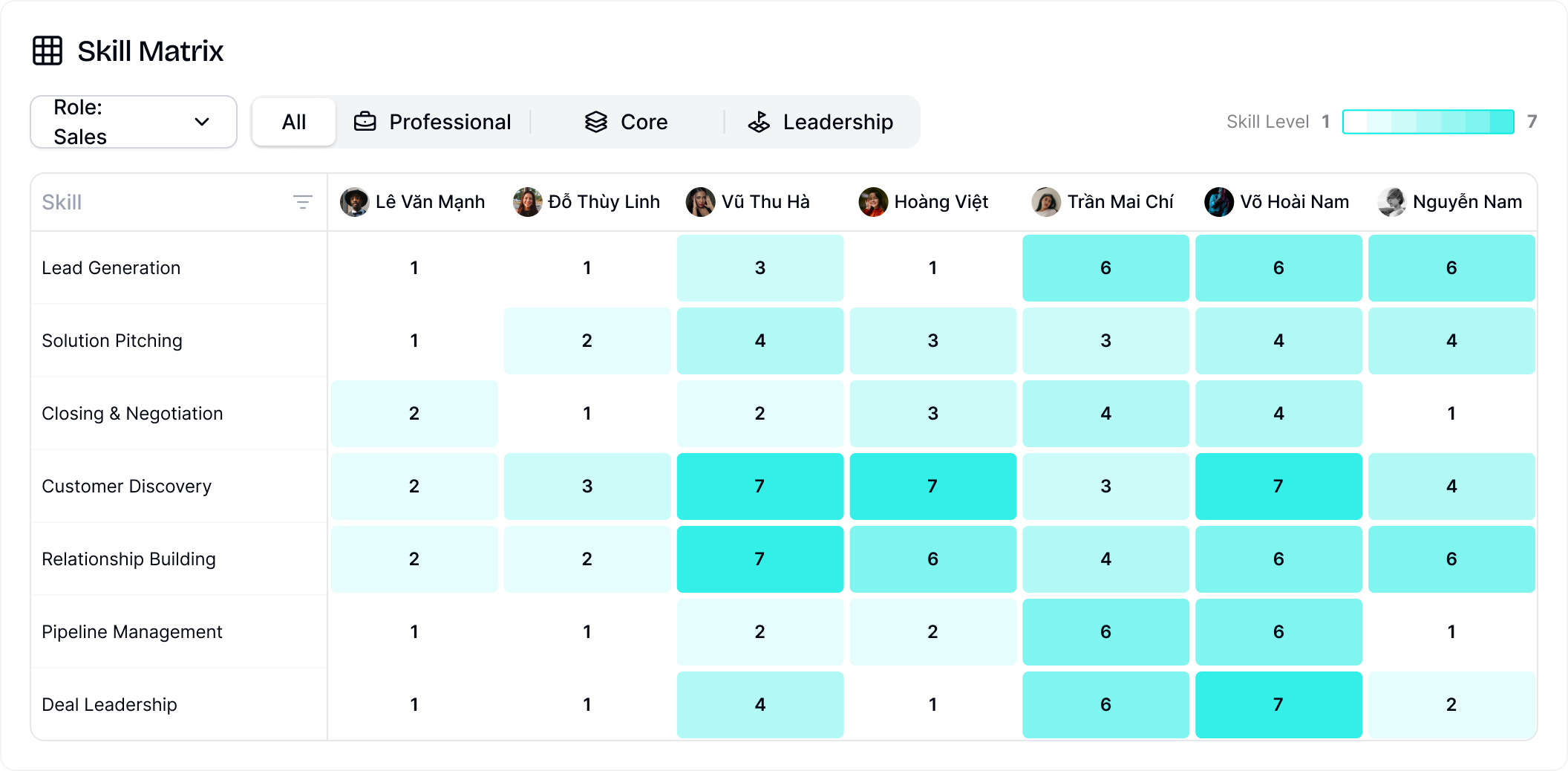 Talent Visibility enables leaders to identify high-potential employees, future successors, and critical capability concentrations.
Without Talent Visibility, workforce decisions become increasingly dependent on assumptions and intuition.
What Is Workforce Readiness?
One of the most important outcomes of Talent Intelligence is Workforce Readiness.
Simply put:
Does the organization have the capabilities required to achieve future business goals?
Consider a company planning to launch three new business units within the next year.
Leadership needs answers to questions such as:
- Do we have enough future managers?
- Which employees are ready for promotion?
- What skills must be developed immediately?
- Where do capability shortages exist?
 Workforce Readiness helps organizations evaluate whether current capabilities can support future business goals.
Talent Intelligence provides evidence-based answers rather than subjective opinions.
Talent Intelligence and Internal Mobility
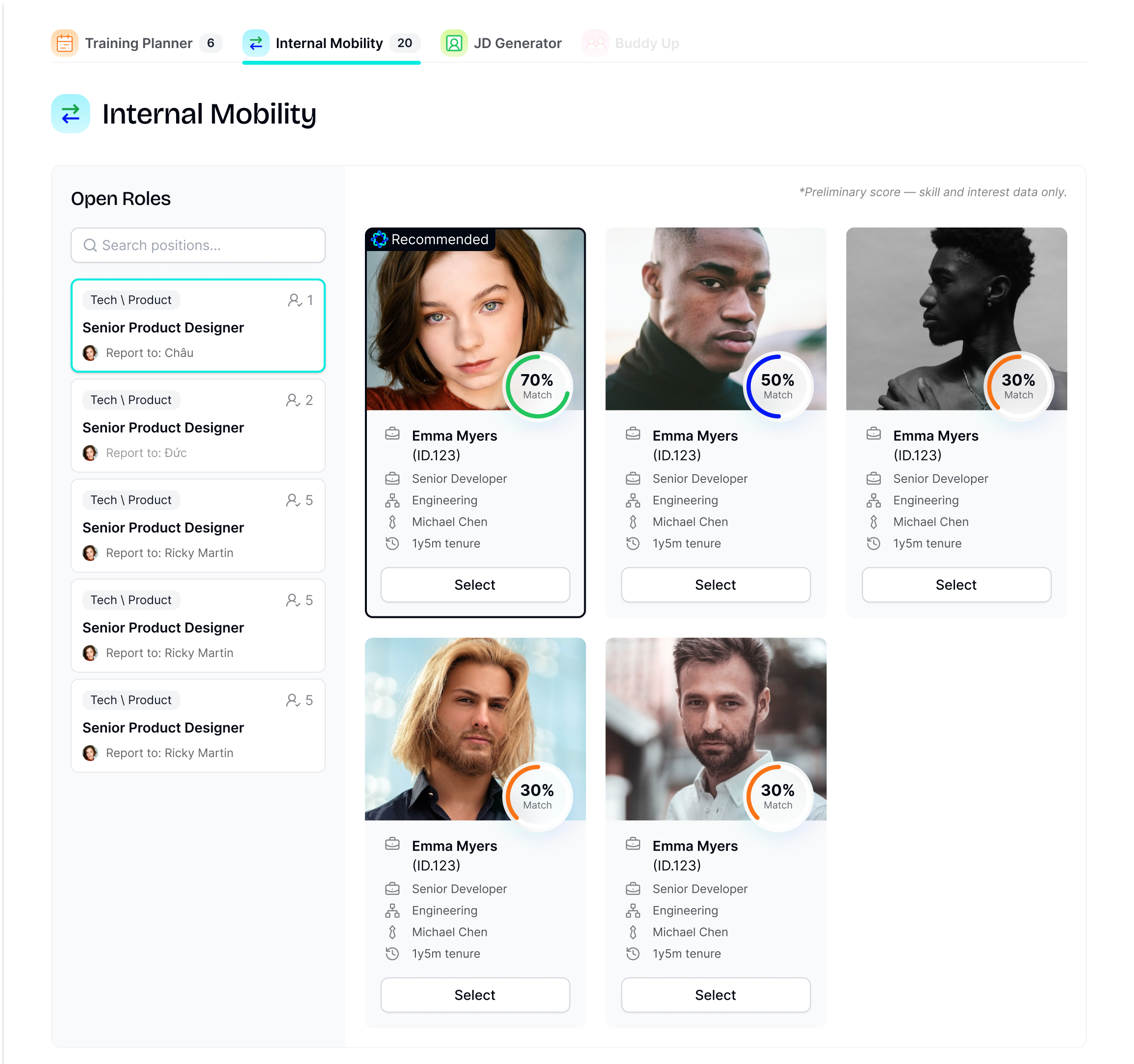
One of the most powerful applications of Talent Intelligence is Internal Mobility.
Before opening a position externally, organizations can identify:
- Employees who are already qualified
- High-potential talent
- Individuals who need limited development before transitioning
Learn more:
Organizations that excel at Internal Mobility often reduce hiring costs while improving employee retention.
The Building Blocks of Talent Intelligence
Talent Intelligence is built on multiple layers of workforce data.
Competency Framework
Organizations must first define the capabilities required for success.
A Competency Framework establishes:
- Required competencies
- Expected behaviors
- Proficiency levels
Learn more:
What Is a Competency Framework?
Competency Assessment
Once expectations are defined, organizations need to understand current capability levels.
Assessment provides the baseline workforce data required for analysis.
Learn more:
Employee Competency Assessment Software: What Growing Companies Should Look For
Skill Gap Analysis
Organizations then compare current capabilities against future requirements.
This reveals where development investments should be focused.
Learn more:
Career Pathing
Career Paths connect capability development to future opportunities.
Employees gain visibility into what is required to progress.
Learn more:
Together, these components create the foundation for Talent Intelligence.
Signs Your Organization Needs Talent Intelligence
Your organization may benefit from Talent Intelligence if:
- Leadership cannot identify future successors
- Hiring continues despite available internal talent
- Workforce capability gaps are difficult to measure
- Development investments lack clear prioritization
- Talent decisions rely heavily on manager opinions
- Assessment data exists but rarely influences business decisions
If several of these challenges sound familiar, the issue may not be a lack of data.
The issue may be a lack of Talent Intelligence.
The Future of Talent Management
Traditional HR focused on managing people.
Modern organizations must manage capabilities.
High-growth companies increasingly need answers to questions such as:
Is our workforce prepared for the next stage of growth?
This requires more than performance reviews.
It requires Talent Intelligence.
Organizations that can understand, visualize, and act on workforce capability data gain a significant competitive advantage.
See How SkillMAP Helps Build Talent Intelligence
SkillMAP helps organizations:
- Build competency frameworks
- Assess workforce capabilities
- Identify skill gaps
- Track workforce readiness
- Support internal mobility
- Visualize Talent Intelligence across the organization
Instead of creating isolated assessment reports, SkillMAP helps transform capability data into actionable talent decisions.
👉 Explore SkillMAP Demo with sample data
👉 Or talk with our team about building a Talent Intelligence strategy for your organization
Frequently Asked Questions
What is Talent Intelligence?
Talent Intelligence is the practice of using workforce capability and skills data to support talent and business decisions.
How is Talent Intelligence different from competency assessment?
Competency assessment measures capabilities. Talent Intelligence uses those insights to guide workforce planning, internal mobility, and talent development.