Quick Takeaways
Internal Mobility enables organizations to fill roles, develop careers, and retain talent by leveraging existing employees instead of relying solely on external recruitment.
- Internal Mobility reduces hiring costs and improves retention.
- Career Paths and Skill Gap Analysis are critical foundations.
- Organizations need talent visibility to make Internal Mobility successful.
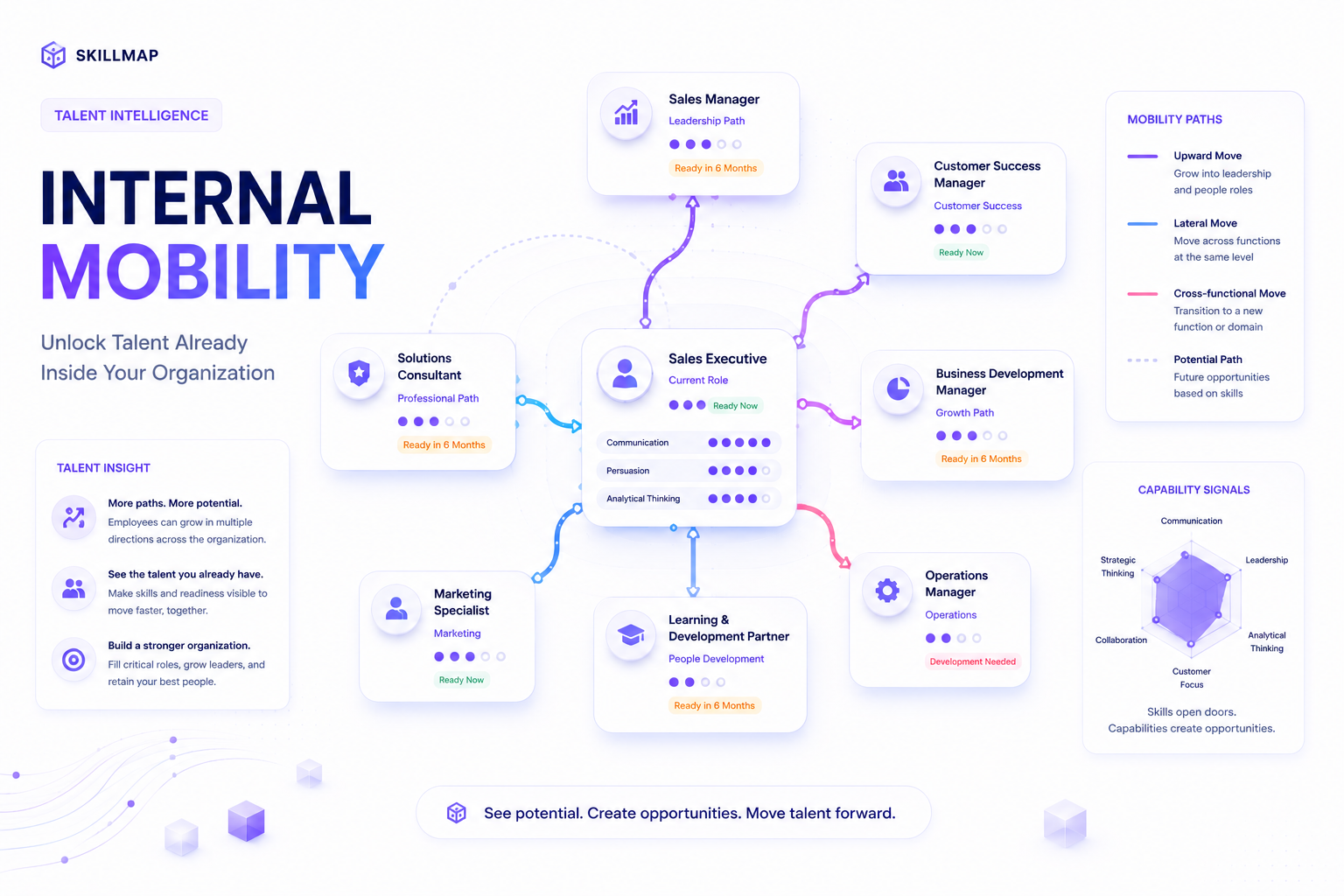
What Is Internal Mobility?
When a critical position becomes available, most organizations immediately start searching for external candidates.
But many companies overlook one of their most valuable talent sources:
The people who are already inside the organization.
This is where Internal Mobility comes in.
Internal Mobility is the practice of enabling employees to grow, move, and advance within an organization through promotions, lateral moves, project assignments, or career transitions.
Instead of relying exclusively on external recruitment, companies maximize the value of the talent they already have.
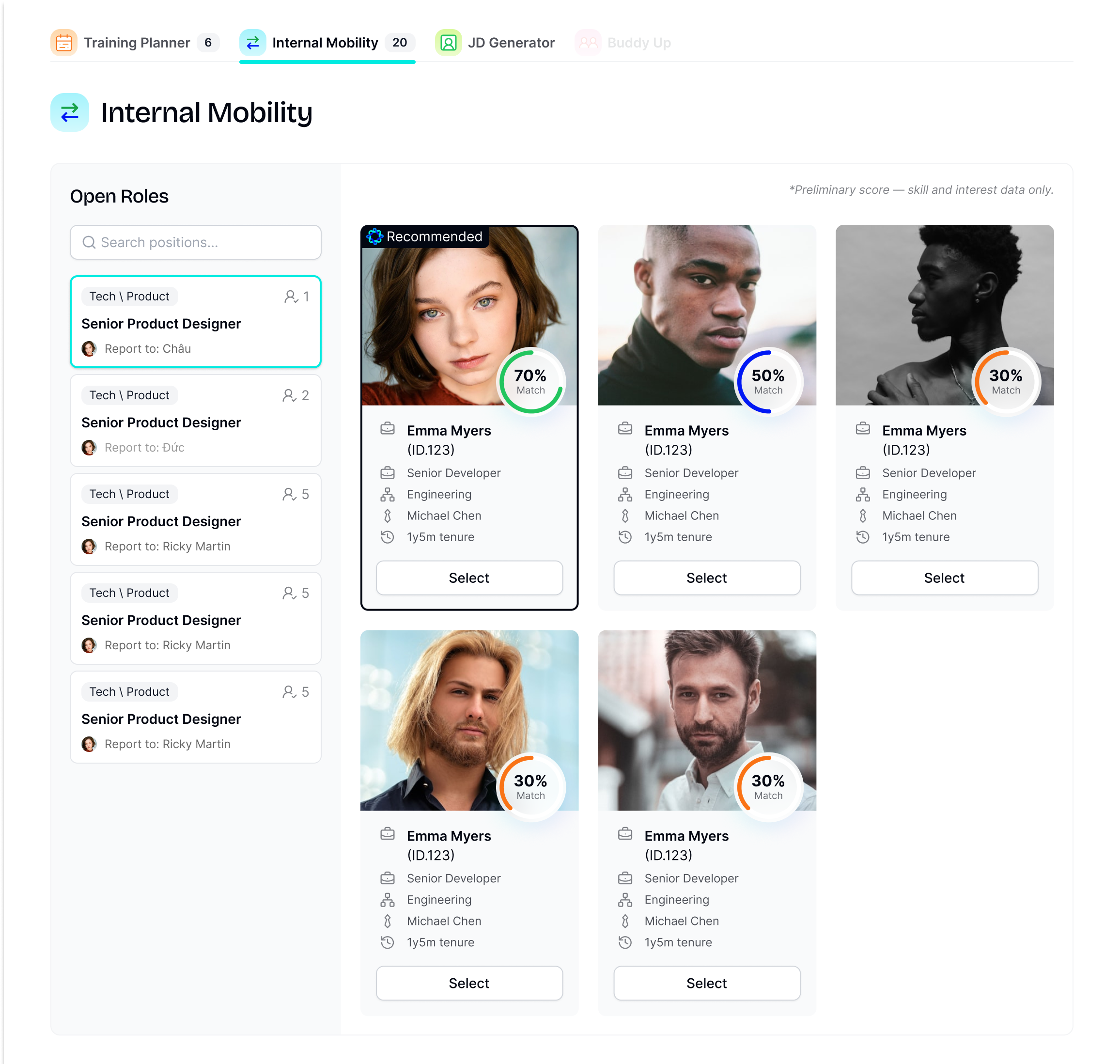 Internal Mobility helps organizations discover qualified employees before turning to external recruitment.
Why Internal Mobility Matters More Than Ever
As organizations grow, they often face common challenges:
- Rising recruitment costs
- Longer hiring cycles
- Increasing competition for talent
- Loss of institutional knowledge
- Leadership succession risks
At the same time, many existing employees have the potential to take on larger responsibilities if given the right development opportunities.
This is why Internal Mobility has become a key pillar of modern talent management.
Internal Mobility Is More Than Promotion
Many people assume Internal Mobility simply means promoting employees.
In reality, it includes several forms of movement.
| Mobility Type | Example |
|---|---|
| Vertical Mobility | Sales Executive → Team Lead |
| Horizontal Mobility | Marketing → Product Marketing |
| Cross-functional Mobility | Customer Success → Sales |
| Project Mobility | Assignment to a strategic initiative |
The goal is not merely to increase job titles.
The goal is to deploy talent more effectively across the organization.
Benefits of Internal Mobility
Lower Recruitment Costs
Hiring externally often requires significant investments in sourcing, interviewing, onboarding, and ramp-up time.
Internal Mobility reduces those costs while accelerating productivity.
Better Talent Retention
One of the most common reasons employees leave is the lack of visible growth opportunities.
When employees can see a future within the company, engagement and retention improve significantly.
Greater Workforce Agility
Organizations can redeploy talent more quickly when business priorities change.
Stronger Succession Planning
Internal Mobility helps identify and prepare future leaders before critical positions become vacant.
Why Many Organizations Struggle With Internal Mobility
Although the concept sounds simple, execution is often difficult.
The biggest reason is:
Organizations lack visibility into the capabilities that already exist inside the company.
Most leaders can answer:
- Who is performing well today?
But struggle to answer:
- Who is ready for the next role?
- Who has leadership potential?
- Which teams have capability gaps?
- Where are critical skills concentrated?
Without talent visibility, Internal Mobility often becomes subjective and inconsistent.
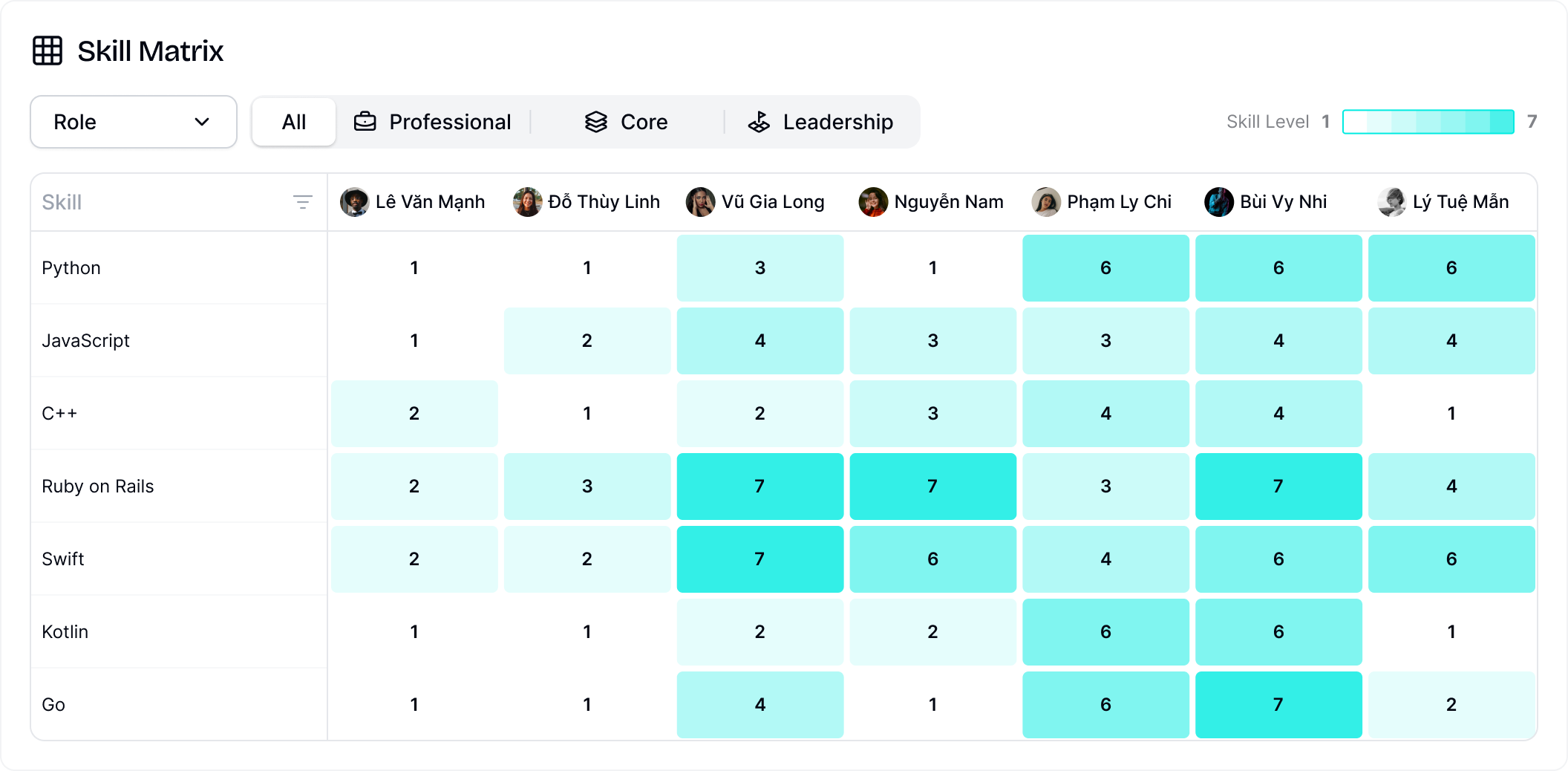 Talent Visibility helps leaders identify who is ready for the next role and where critical capabilities already exist.
Internal Mobility Starts With a Competency Framework
Organizations must first define:
- What capabilities are required for each role?
- What proficiency level is expected?
This is the role of a Competency Framework.
Learn more:
What Is a Competency Framework?
Internal Mobility and Skill Gap Analysis
After defining role requirements, organizations need to understand the gap between current and desired capabilities.
This is where Skill Gap Analysis becomes essential.
For example:
A Senior Sales Executive wants to become a Team Lead.
Required competencies:
- Coaching Level 3
- Communication Level 3
- Leadership Level 2
Current competencies:
- Coaching Level 2
- Communication Level 3
- Leadership Level 1
Skill Gap Analysis reveals exactly what development is needed before the employee can transition successfully.
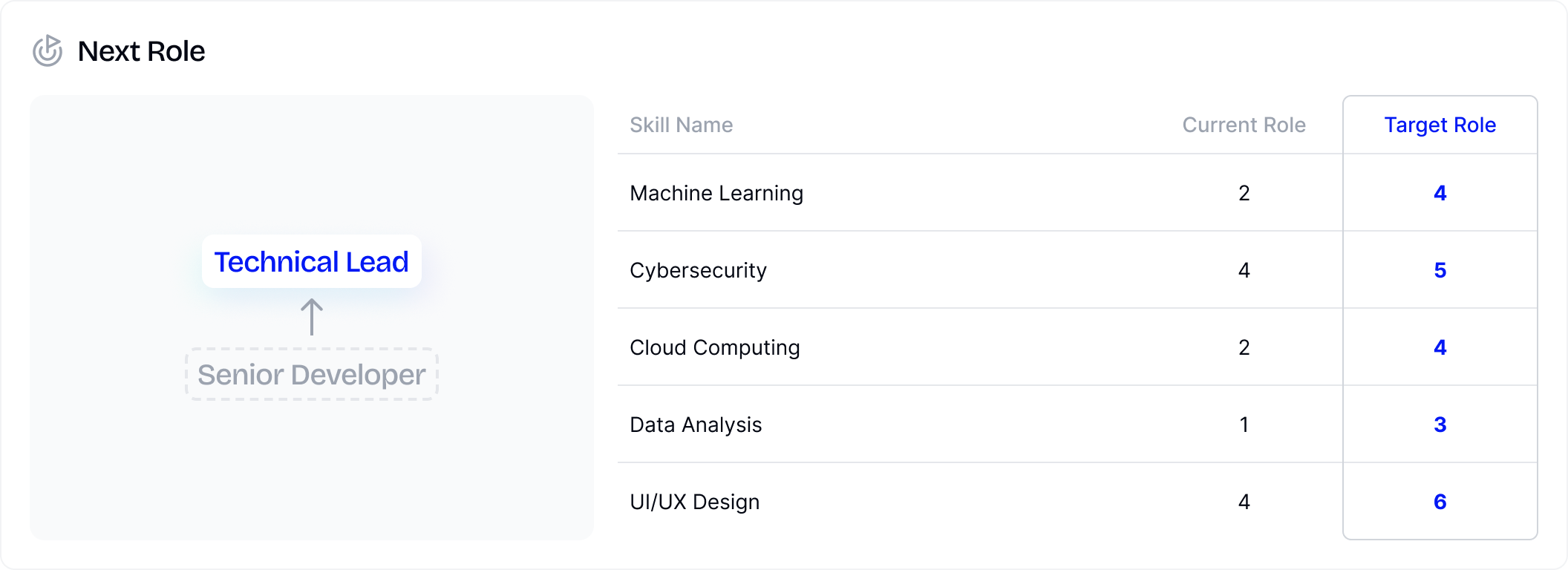 Employees can see the competencies they need to develop before moving into future roles.
Learn more:
Internal Mobility and Career Paths
Employees cannot navigate opportunities they cannot see.
Career Paths provide transparency by showing:
- Possible future roles
- Required competencies
- Development milestones
Instead of saying:
Work hard and you may be promoted.
Organizations can say:
To become a Team Lead, you need Level 3 proficiency in competencies A, B, and C.
This transforms career growth into a structured process.
Learn more:
From Internal Mobility to Talent Intelligence
As organizations scale, leaders need answers to increasingly strategic questions:
- Who is ready for the next role?
- Which positions have succession risk?
- What capabilities are missing?
- Where should we prioritize internal development over hiring?
These questions require more than performance reviews.
They require Talent Intelligence.
See How SkillMAP Supports Internal Mobility
SkillMAP helps organizations:
- Build competency frameworks
- Assess workforce capabilities
- Identify skill gaps
- Track workforce readiness
- Support succession planning
- Discover Internal Mobility opportunities through data
👉 Explore SkillMAP Demo with sample data
👉 Or talk with our team about building a stronger talent development strategy
Frequently Asked Questions
What is Internal Mobility?
Internal Mobility refers to the movement of employees into new roles, projects, or career opportunities within the same organization.
How is Internal Mobility different from internal hiring?
Internal hiring is only one part of Internal Mobility, which also includes career development, lateral moves, and succession planning.