Quick Takeaways
Skill Gap Analysis is the process of identifying the difference between current employee capabilities and the competencies required to support future business growth.
- A skill gap is the difference between current and required capabilities.
- Skill Gap Analysis helps prioritize talent development investments.
- It connects competency assessment with workforce planning.
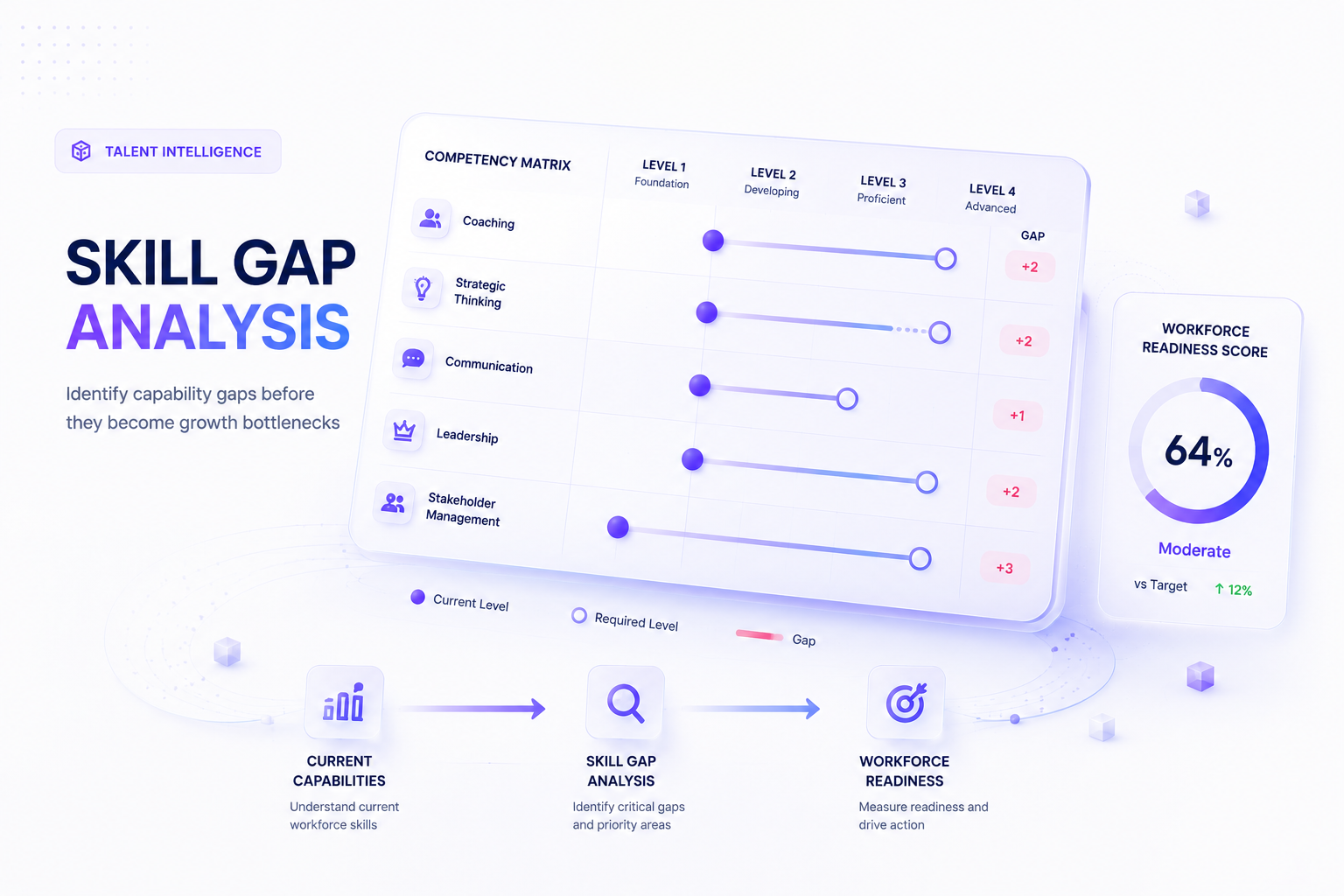
What Is Skill Gap Analysis?
Most organizations know who is performing well today.
However, far fewer can answer a more important question:
Does our workforce have the capabilities required to achieve our growth goals over the next 12–24 months?
This is the challenge that Skill Gap Analysis is designed to solve.
Skill Gap Analysis is the process of identifying the difference between the capabilities employees currently possess and the competencies required to support future business objectives, strategic initiatives, or role expectations.
For growing companies, the goal is not simply to evaluate employees.
The real objective is to understand whether the workforce is prepared for the next stage of growth.
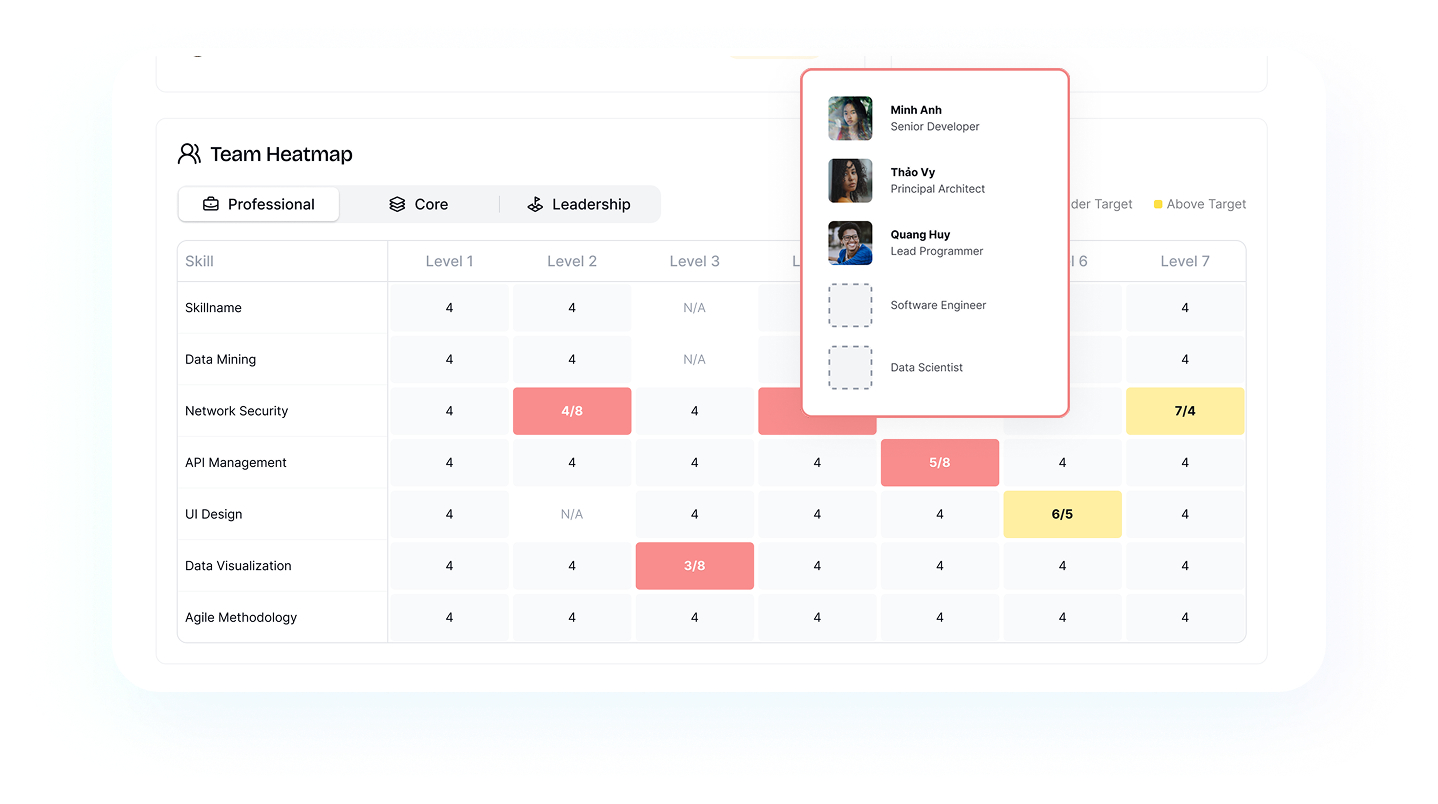 Skill Gap Analysis helps organizations visualize capability shortages across teams and identify development priorities.
Why Is Skill Gap Analysis Important?
As companies scale, capability requirements evolve.
A team that performs effectively with 30 employees may face completely different challenges when the organization reaches 100 or 200 people.
Common signs of workforce capability gaps include:
- Limited leadership-ready talent
- Difficulty executing new strategic initiatives
- Training programs that fail to produce measurable outcomes
- Overreliance on a few key individuals
- Continuous hiring despite ongoing capability shortages
In many cases, the problem is not a lack of people.
The problem is a lack of visibility into workforce capabilities.
Skill Gap Analysis provides a structured approach to identifying capability shortages and prioritizing development efforts based on business needs.
Skill Gap Analysis vs Competency Assessment
Many organizations use these terms interchangeably.
However, they serve different purposes.
| Competency Assessment | Skill Gap Analysis |
|---|---|
| Measures current capabilities | Identifies capability gaps |
| Focuses on employees today | Focuses on future requirements |
| Produces assessment data | Produces development priorities |
| Answers “Where are we?” | Answers “What is missing?” |
Competency Assessment is often the starting point.
Skill Gap Analysis is the step that turns assessment data into workforce decisions.
How Is a Skill Gap Identified?
At its core:
Skill Gap = Required Capability − Current Capability
For example:
| Competency | Required Level | Current Level |
|---|---|---|
| Coaching | Level 3 | Level 2 |
| Strategic Thinking | Level 3 | Level 1 |
| Stakeholder Management | Level 2 | Level 2 |
In this example, Coaching and Strategic Thinking represent capability gaps that require development.
These gaps become the foundation for training initiatives, succession planning, and career development programs.
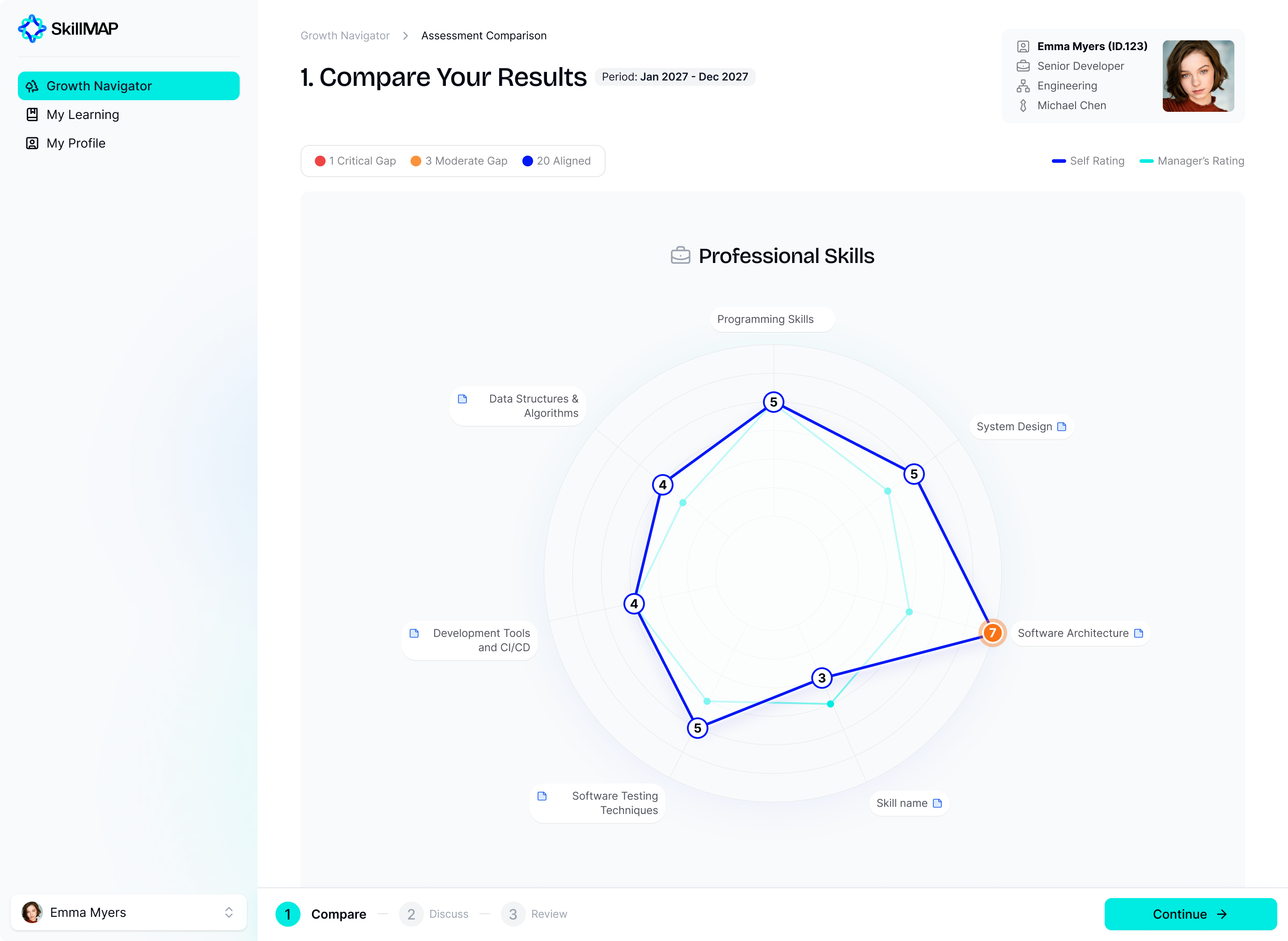 Comparing current and required proficiency levels helps organizations identify development priorities for each employee.
A Practical Skill Gap Analysis Process for SMEs
Step 1: Identify Critical Roles
Organizations do not need to analyze every position immediately.
Start with roles that have a significant impact on business performance, such as:
- Sales Manager
- Product Manager
- Customer Success Lead
- Team Lead
Step 2: Define Required Competencies
This is typically done through a Competency Framework.
A competency framework defines the knowledge, skills, behaviors, and proficiency levels required for success in a role.
Without a standardized framework, organizations struggle to identify capability gaps consistently.
Step 3: Assess Current Capabilities
Organizations can evaluate current capabilities using:
- Self-assessment
- Manager assessment
- 360-degree feedback
- Competency assessment software
The objective is to create an objective and reliable view of existing workforce capabilities.
Step 4: Compare Current and Required Capabilities
This stage focuses on identifying:
- Which competencies are missing
- The severity of each gap
- Whether gaps exist at the individual, team, or organizational level
The output should provide clear visibility into development priorities.
Step 5: Build Development Plans
Once capability gaps are identified, organizations can take action through:
- Targeted training programs
- Career development initiatives
- Succession planning
- Internal mobility programs
The goal is not simply to identify gaps but to close them strategically.
Individual Skill Gaps vs Team Skill Gaps
Most organizations evaluate employees individually.
However, leadership teams often need a broader view.
Questions such as the following are often more important:
- Does the Sales team have enough coaching capability?
- Does Product have sufficient strategic thinking skills?
- Are we overly dependent on a few key employees?
- Which teams present the highest workforce readiness risks?
Team-level Skill Gap Analysis helps leaders understand capability gaps at an organizational level rather than focusing only on individual employees.
Career Development and Skill Gap Analysis
One of the most valuable applications of Skill Gap Analysis is career development.
Organizations can use capability data to build transparent Career Paths that help employees understand what skills they need to develop before moving into the next role.
Instead of relying on tenure or subjective judgment, promotion decisions can be based on demonstrated readiness.
For example, an employee aspiring to become a Team Lead may need to strengthen competencies such as:
- Coaching
- Communication
- Stakeholder Management
- Decision Making
Skill Gap Analysis makes these requirements visible and measurable.
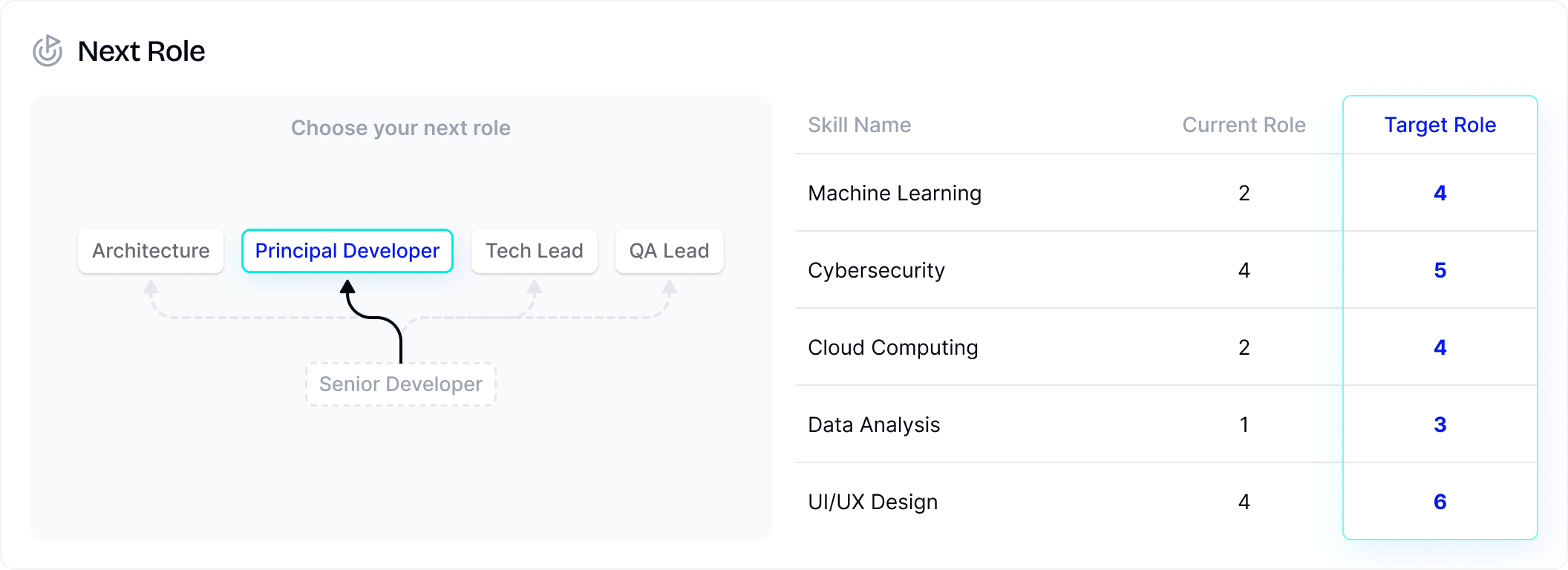 Employees can see which competencies they need to develop before moving into the next role.
Common Mistakes in Skill Gap Analysis
Focusing Only on KPIs
KPIs measure outcomes.
However, they do not explain the capabilities that drive those outcomes.
Two employees may achieve similar results while demonstrating very different competency levels.
Relying on Subjective Assessments
Without standardized criteria, capability evaluations are often influenced by personal bias.
This can lead to inaccurate development priorities and poor talent decisions.
Failing to Connect Capability Gaps to Business Goals
Skill Gap Analysis only creates value when linked directly to organizational strategy.
The objective is not to assess employees for the sake of assessment.
The objective is to prepare the workforce for future business requirements.
From Skill Gap Analysis to Talent Intelligence
Skill Gap Analysis is often the bridge between competency assessment and workforce planning.
Organizations that gain visibility into workforce capabilities can make better decisions about:
- Succession planning
- Internal mobility
- Talent development
- Workforce readiness
At this stage, workforce capability data becomes business intelligence.
Instead of asking:
How did employees perform?
Organizations begin asking:
- Which capabilities are missing?
- Who is ready for the next role?
- Which positions present succession risks?
- Where should development investments be prioritized?
This is where competency data evolves into Talent Intelligence.
Explore How SkillMAP Visualizes Skill Gaps
Most organizations can identify skill gaps at the individual level.
Few can visualize capability gaps across teams, functions, and future roles.
SkillMAP helps organizations:
- Build competency frameworks
- Assess workforce capabilities
- Identify skill gaps
- Measure workforce readiness
- Support internal mobility decisions
- Develop stronger talent pipelines
Instead of relying on spreadsheets and fragmented assessments, organizations gain a centralized view of workforce capabilities and development priorities.
This is where competency assessment evolves into Talent Intelligence.
👉 Explore SkillMAP Demo with sample data
👉 Talk with the SkillMAP team about Workforce Readiness and Talent Intelligence
Frequently Asked Questions
What is Skill Gap Analysis?
Skill Gap Analysis is the process of identifying the difference between current employee capabilities and the competencies required to achieve business objectives.
When should organizations conduct Skill Gap Analysis?
Organizations typically conduct Skill Gap Analysis during periods of growth, organizational change, workforce planning, or leadership development initiatives.
What is the difference between Skill Gap Analysis and Competency Assessment?
Competency Assessment measures current capabilities, while Skill Gap Analysis identifies the gap between current capabilities and future requirements.
Can SMEs conduct Skill Gap Analysis without HR software?
Yes, but software makes it easier to visualize capability gaps, track development progress, and analyze workforce readiness at scale.