Quick Takeaways
A Skills Inventory is a centralized system for tracking workforce capabilities, helping organizations make smarter talent decisions.
- You cannot manage capabilities you cannot see.
- Skills Inventory is the foundation of Talent Intelligence.
- Skill data supports Workforce Planning, Internal Mobility, and Succession Planning.
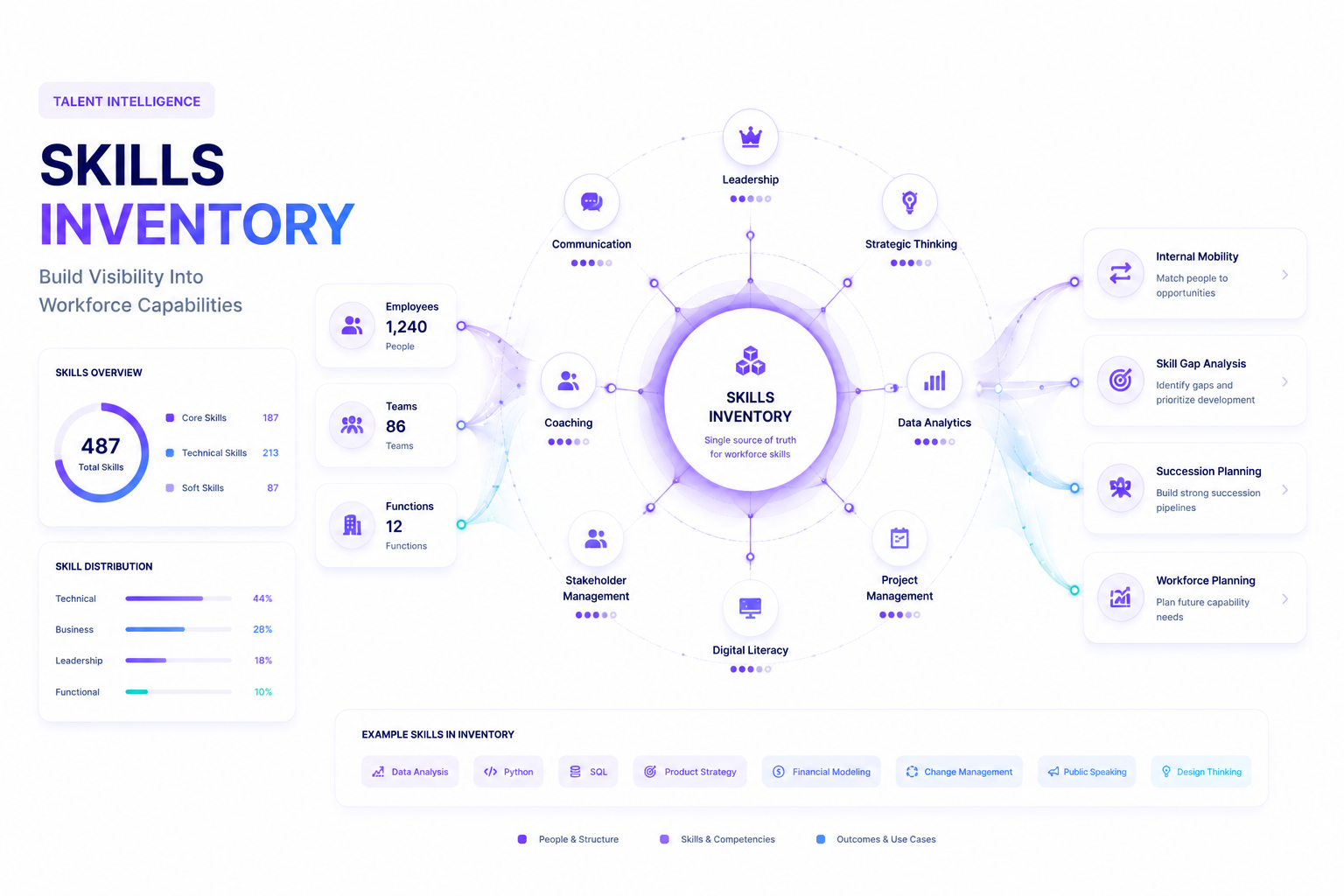
What Is a Skills Inventory?
Consider a simple question:
Who in your organization has the skills needed for the next strategic initiative?
Most organizations struggle to answer.
They know job titles.
They know reporting structures.
But they often lack visibility into workforce capabilities.
This is the problem a Skills Inventory is designed to solve.
A Skills Inventory is a centralized system for tracking, organizing, and maintaining workforce skills and competencies.
It creates a living map of workforce capabilities.
Why Organizations Need a Skills Inventory
As organizations grow, leadership visibility decreases.
Questions become harder to answer:
- Who is ready for a new role?
- Who has project management experience?
- Who possesses critical future skills?
- Which capabilities are missing?
Without a Skills Inventory, these decisions are often based on assumptions.
This can lead to:
- Unnecessary hiring
- Missed internal mobility opportunities
- Weak succession pipelines
- Poor workforce planning
Skills Inventory vs Employee Records
These are not the same thing.
| Employee Record | Skills Inventory |
|---|---|
| Stores employee information | Stores capability data |
| Job title and department | Skills and proficiency levels |
| Administrative focus | Strategic workforce focus |
| Reflects the past | Supports future decisions |
Employee records tell you where someone works.
Skills Inventories tell you what they can do.
What Should Be Included in a Skills Inventory?
Technical Skills
Examples include:
- Data Analysis
- Product Discovery
- Project Management
- Sales Forecasting
Behavioral Competencies
Often based on a Competency Framework.
Examples include:
- Communication
- Coaching
- Strategic Thinking
- Problem Solving
Proficiency Levels
Organizations need more than a list of skills.
They need to know proficiency levels.
For example:
- Level 1: Basic
- Level 2: Proficient
- Level 3: Advanced
Skills Inventory and Skill Gap Analysis
One of the most important applications of a Skills Inventory is supporting Skill Gap Analysis.
Organizations need to compare:
- Existing capabilities
- Future capability requirements
The gap between the two represents the skill gap.
Without a Skills Inventory, this analysis becomes difficult and unreliable.
Skills Inventory and Internal Mobility
Many organizations miss opportunities to promote or redeploy internal talent because they cannot see existing capabilities.
This is why Internal Mobility has become increasingly important.
A Skills Inventory helps organizations identify employees who may already possess the capabilities needed for new roles.
Skills Inventory and Workforce Planning
Modern Workforce Planning focuses on capabilities rather than headcount.
A Skills Inventory helps answer:
- What capabilities do we already have?
- What capabilities are missing?
- Can we develop talent internally?
These insights improve workforce planning decisions significantly.
Common Skills Inventory Mistakes
Only Capturing Skills During Hiring
Skills evolve continuously.
Workforce capability data must be updated regularly.
No Standardized Competency Framework
Without a consistent framework, skill data becomes unreliable.
Collecting Data Without Using It
Skills Inventory creates value only when it supports:
- Talent Development
- Internal Mobility
- Succession Planning
- Workforce Planning
Skills Inventory as the Foundation of Talent Intelligence
Many organizations want to build Talent Intelligence.
However, Talent Intelligence starts with visibility.
Organizations need to know:
- Who has which skills?
- Where are those skills located?
- How proficient are employees?
A Skills Inventory provides the foundation for answering these questions.
From Skills Visibility to Competitive Advantage
Organizations that grow successfully do not necessarily have more talent.
They simply understand and utilize their workforce capabilities more effectively.
Skills visibility enables better workforce decisions and stronger organizational agility.
Explore How SkillMAP Builds a Skills Inventory
SkillMAP helps organizations:
- Build competency frameworks
- Assess workforce capabilities
- Create a centralized Skills Inventory
- Identify skill gaps
- Support Internal Mobility
- Build Talent Intelligence with workforce data
Frequently Asked Questions
What is a Skills Inventory?
A Skills Inventory is a system used to track and manage workforce skills, competencies, and proficiency levels.
How is a Skills Inventory different from an employee profile?
Employee profiles focus on personal and employment information, while Skills Inventories focus on capabilities and workforce skills.