Quick Takeaways
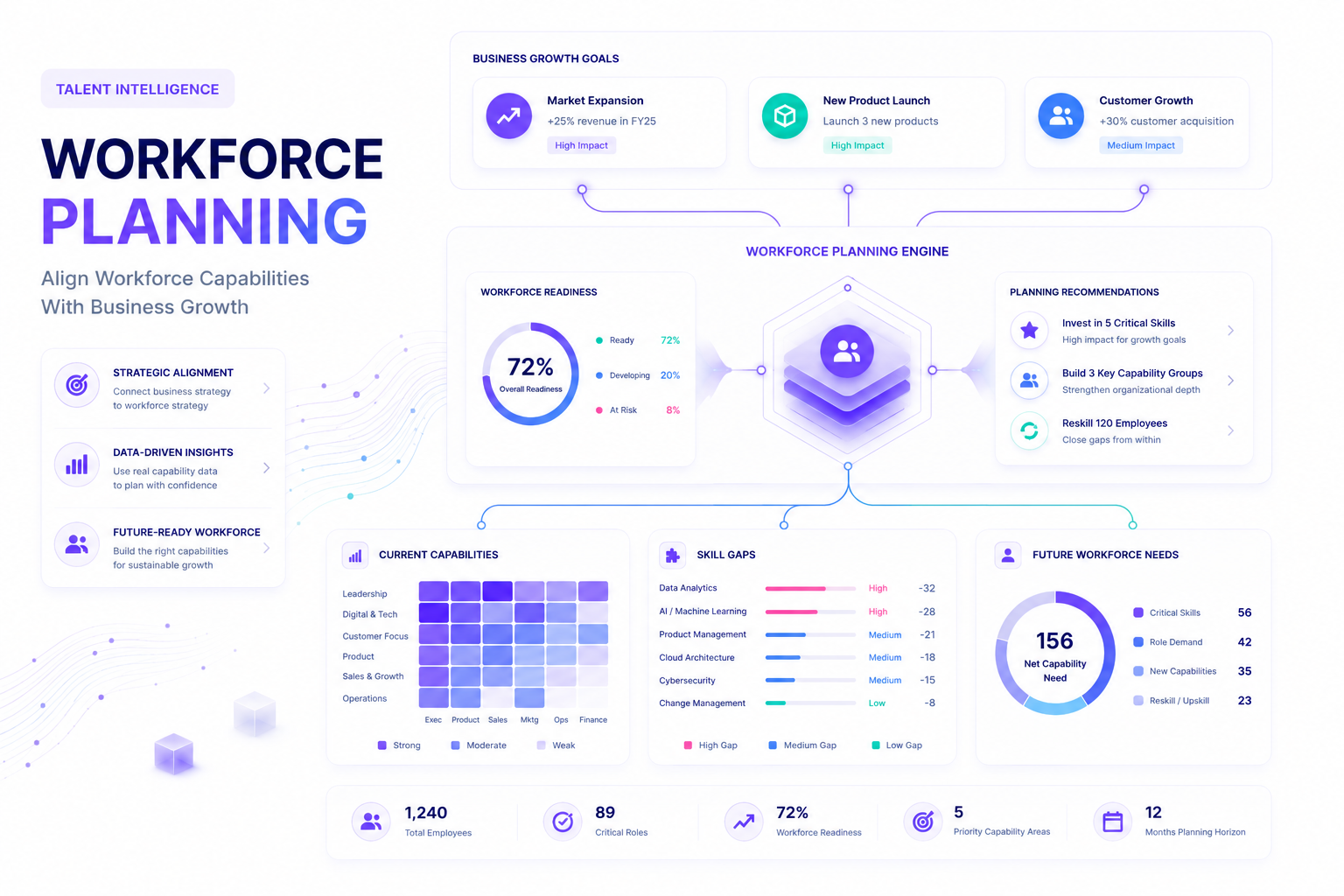
Workforce Planning is the process of forecasting future workforce needs and ensuring an organization has the capabilities required to execute its strategy.
- Modern Workforce Planning focuses on capabilities, not just headcount.
- Organizations need visibility into workforce readiness and skill gaps.
- Talent Intelligence enables more accurate workforce planning decisions.
What Is Workforce Planning?
As organizations grow, leadership teams often ask:
- How many people do we need next year?
- Does our current workforce have the capabilities required for future growth?
- Should we hire externally or develop internal talent?
- Which skills will become critical over the next few years?
These are the questions Workforce Planning is designed to answer.
Workforce Planning is the process of forecasting future workforce and capability needs, then building a strategy to ensure the organization has the talent required to execute its business goals.
Today, Workforce Planning is no longer just about headcount.
It is increasingly about capabilities.
Why Workforce Planning Matters
Many organizations only react when a workforce need becomes urgent.
This often results in:
- Last-minute hiring
- Higher recruitment costs
- Delays in strategic initiatives
- Talent shortages
- Increased dependence on external hiring
Workforce Planning allows organizations to become proactive instead of reactive.
How Workforce Planning Has Evolved
Traditionally, Workforce Planning focused on one question:
How many employees do we need?
Modern organizations ask a different question:
What capabilities do we need?
| Traditional Workforce Planning | Modern Workforce Planning |
|---|---|
| Headcount-focused | Capability-focused |
| Short-term | Long-term |
| Hiring is the default solution | Build, Buy, or Borrow talent |
| Organizational structure driven | Data-driven |
This shift makes Workforce Planning a key component of Talent Intelligence.
The Modern Workforce Planning Process
Step 1: Understand Business Strategy
Every Workforce Planning initiative should begin with business goals.
Examples include:
- Entering new markets
- Launching new products
- Digital transformation
- Scaling operations
Each goal requires specific workforce capabilities.
Step 2: Assess Workforce Readiness
Organizations first need visibility into their current state.
Our article on Workforce Readiness explains how to evaluate whether teams are prepared for future growth.
Key questions include:
- Where are we strong?
- Which capabilities are missing?
- What are the biggest workforce risks?
Step 3: Conduct a Skill Gap Analysis
Once required capabilities are identified, organizations must compare them against current capabilities.
Skill Gap Analysis helps identify:
- Missing skills
- Capability shortages
- Priority development areas
Step 4: Decide Whether to Build or Buy
Organizations typically have two options:
Build
Develop internal talent through:
- Training
- Coaching
- Career Paths
- Internal Mobility
Buy
Acquire capabilities through recruitment.
Not every capability gap requires hiring.
In many cases, developing internal talent is faster and more cost-effective.
Step 5: Monitor and Adjust
Workforce Planning should not be treated as an annual exercise.
Capability needs evolve constantly.
Organizations need ongoing workforce intelligence to adapt their plans.
Common Workforce Planning Mistakes
Focusing Only on Headcount
Headcount does not determine whether an organization can execute its strategy.
Capabilities do.
Ignoring Capability Data
Many workforce plans are built without understanding existing workforce strengths and weaknesses.
Assuming Hiring Is Always the Answer
Organizations often overlook opportunities to develop internal talent before hiring externally.
Workforce Planning and Talent Intelligence
Modern Workforce Planning depends on visibility into workforce capabilities.
This is why many organizations are investing in Talent Intelligence.
Talent Intelligence helps answer:
- What capabilities do we have?
- What capabilities are missing?
- Who is ready for future roles?
- Should we build talent internally or hire externally?
These insights make Workforce Planning significantly more effective.
From Workforce Planning to Sustainable Growth
Many organizations fail to achieve growth objectives not because they lack strategy, but because they lack the workforce capabilities required to execute it.
Workforce Planning helps bridge the gap between business ambition and workforce reality.
Explore How SkillMAP Supports Workforce Planning
SkillMAP helps organizations:
- Build competency frameworks
- Assess workforce capabilities
- Identify skill gaps
- Measure workforce readiness
- Support succession planning
- Create Talent Intelligence using workforce data
Frequently Asked Questions
What is Workforce Planning?
Workforce Planning is the process of anticipating future workforce and capability requirements to support business objectives.
How is Workforce Planning different from recruitment planning?
Recruitment planning focuses on hiring, while Workforce Planning focuses on ensuring the organization has the capabilities needed for future success.