Quick Takeaways
Employee competency assessment software helps organizations standardize evaluation processes, identify skill gaps, and turn competency data into workforce development decisions instead of simply assigning scores.
- As companies grow, leaders gradually lose visibility into the capabilities that already exist within the organization.
- Excel-based assessments are prone to bias and rarely connect to training plans or succession planning.
- The real value comes from using competency data to identify skill gaps, build career paths, and support succession planning.
- There are three common categories of solutions: survey tools, HRMS platforms with assessment modules, and specialized competency mapping platforms.
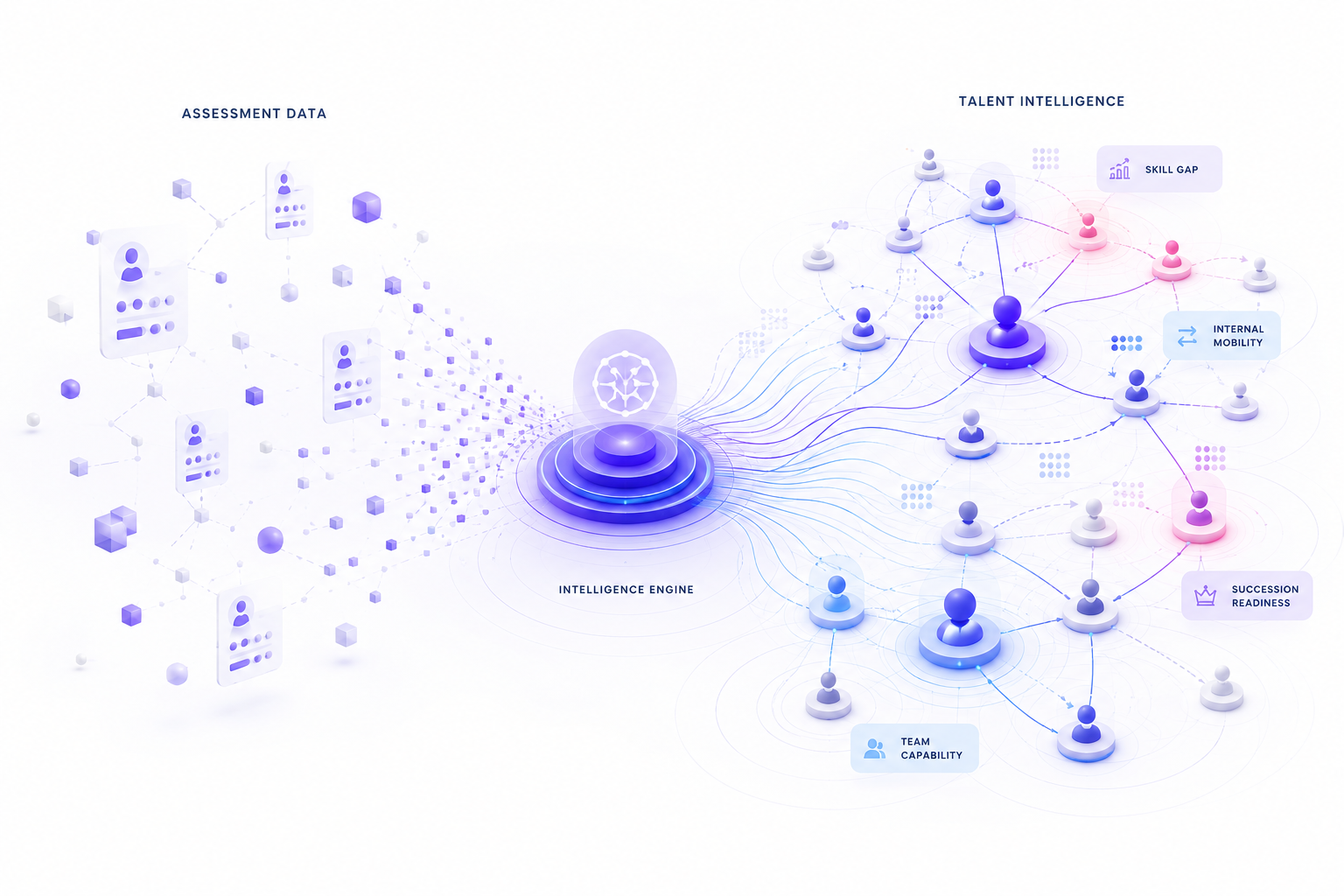
Employee competency assessment software helps organizations evaluate, track, and develop workforce capabilities using standardized criteria. However, for many SMEs, the challenge is not collecting assessment data. The challenge is turning that data into workforce decisions.
As organizations grow from 50 to 200 employees, leaders gradually lose visibility into the capabilities that already exist within the company. Who is ready for the next role? Which skills are missing? Is external hiring truly necessary?
That is why more businesses are replacing spreadsheets with employee competency assessment software that can standardize evaluations, visualize capability gaps, and connect assessments to development plans.
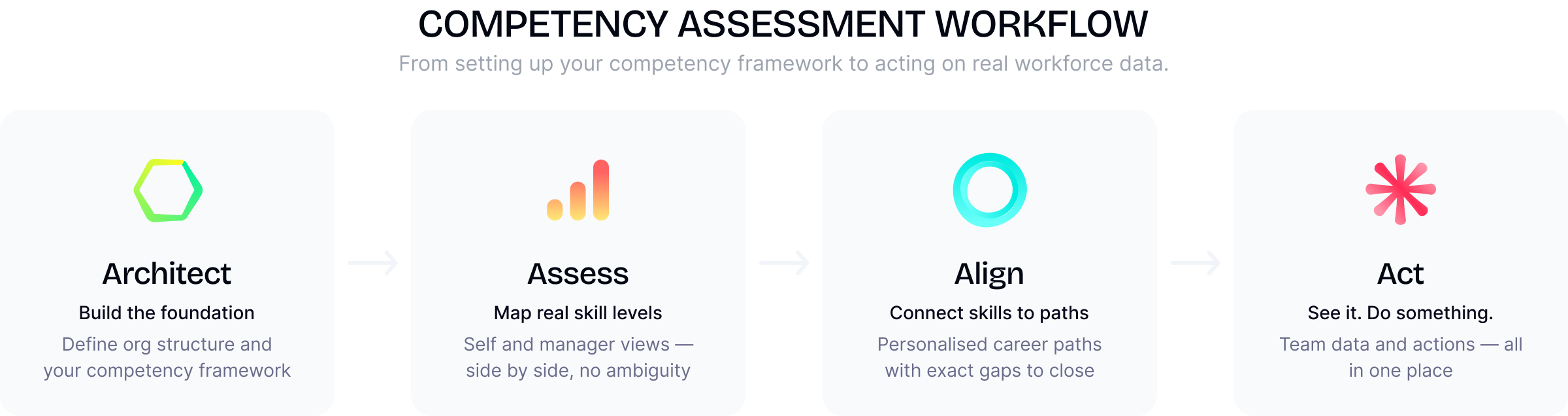 Competency assessment software centralizes workforce capability data and replaces fragmented spreadsheet-based evaluations.
Why Growing Companies Lose Visibility Into Internal Talent
When a company has fewer than 30 employees, leaders usually know every employee’s strengths and weaknesses.
As the organization expands, capabilities become distributed across teams and locations. Visibility declines while workforce complexity increases.
Common challenges begin to emerge:
- Not knowing who can take on new responsibilities
- Failing to identify future leaders
- Becoming overly dependent on a handful of key employees
- Hiring externally for roles that could potentially be filled internally
- Having no reliable view of organization-wide skill gaps
This is not necessarily a talent shortage problem.
It is a visibility problem.
Without a structured competency framework and assessment process, valuable workforce knowledge remains trapped inside managers’ heads.
The Limitations of Evaluating Employee Competencies in Excel
Many SMEs start with spreadsheets because they are simple and inexpensive.
However, Excel becomes increasingly problematic as the workforce grows.
Excel vs Competency Assessment Software
| Traditional Spreadsheet Approach | Competency Assessment Software |
|---|---|
| Subjective evaluations | Standardized competency criteria |
| Data scattered across files | Centralized workforce visibility |
| Difficult reporting | Real-time dashboards |
| No skill gap analysis | Automated gap identification |
| Limited scalability | Organization-wide insights |
Bias in Assessments
Without a standardized framework, evaluations often depend on a manager’s personal perception.
Common biases include:
- Halo effect
- Recency bias
- Personal favoritism
- Inconsistent rating standards
Data That Does Not Lead to Action
Assessment results are often stored in spreadsheets but remain disconnected from:
- Training and development plans
- Workforce planning
- Succession planning
- Skill gap analysis
- Career path development
As a result, HR teams collect data without generating meaningful decisions.
Competency Assessment Is Only the Beginning
Many organizations believe the purpose of competency assessment is simply to score employees.
In reality, scores alone create very little business value.
The real value emerges when competency data becomes actionable.
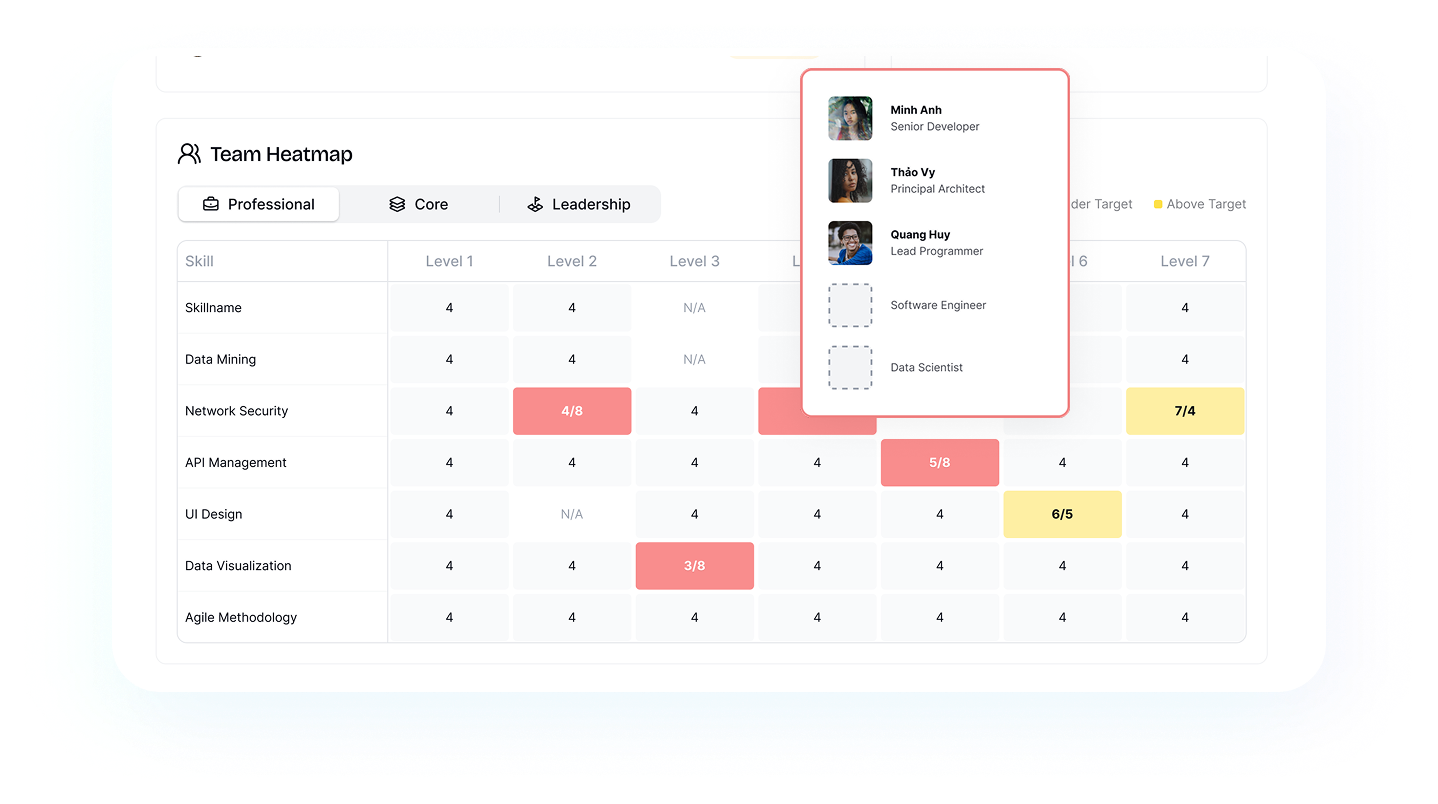 Skill gap analysis helps organizations identify capability shortages and prioritize development investments.
Identify Skill Gaps
Organizations can compare current capabilities against future requirements and prioritize development investments.
Build Career Paths
Employees gain clarity about the competencies required for advancement. This becomes significantly easier when assessments are built on a structured competency framework.
Support Succession Planning
Future leaders can be identified before critical positions become vacant.
Enable Internal Mobility
Organizations can uncover hidden talent before turning to expensive external recruitment.
At this stage, competency assessment evolves from an HR process into a business growth tool.
Three Common Types of Employee Competency Assessment Software
1. Survey Tools
Examples include Google Forms and Typeform.
Suitable for very small organizations conducting occasional assessments.
2. HRMS Platforms With Assessment Modules
Suitable for organizations already using an HRMS and requiring basic evaluation functionality.
3. Specialized Competency Mapping Platforms
Designed specifically to:
- Assess competencies
- Visualize skill gaps
- Build development pathways
- Support workforce planning
- Enable talent intelligence reporting
These solutions are typically the best fit for growing organizations that want to turn workforce data into management decisions.
Four Questions to Answer Before Choosing a Solution
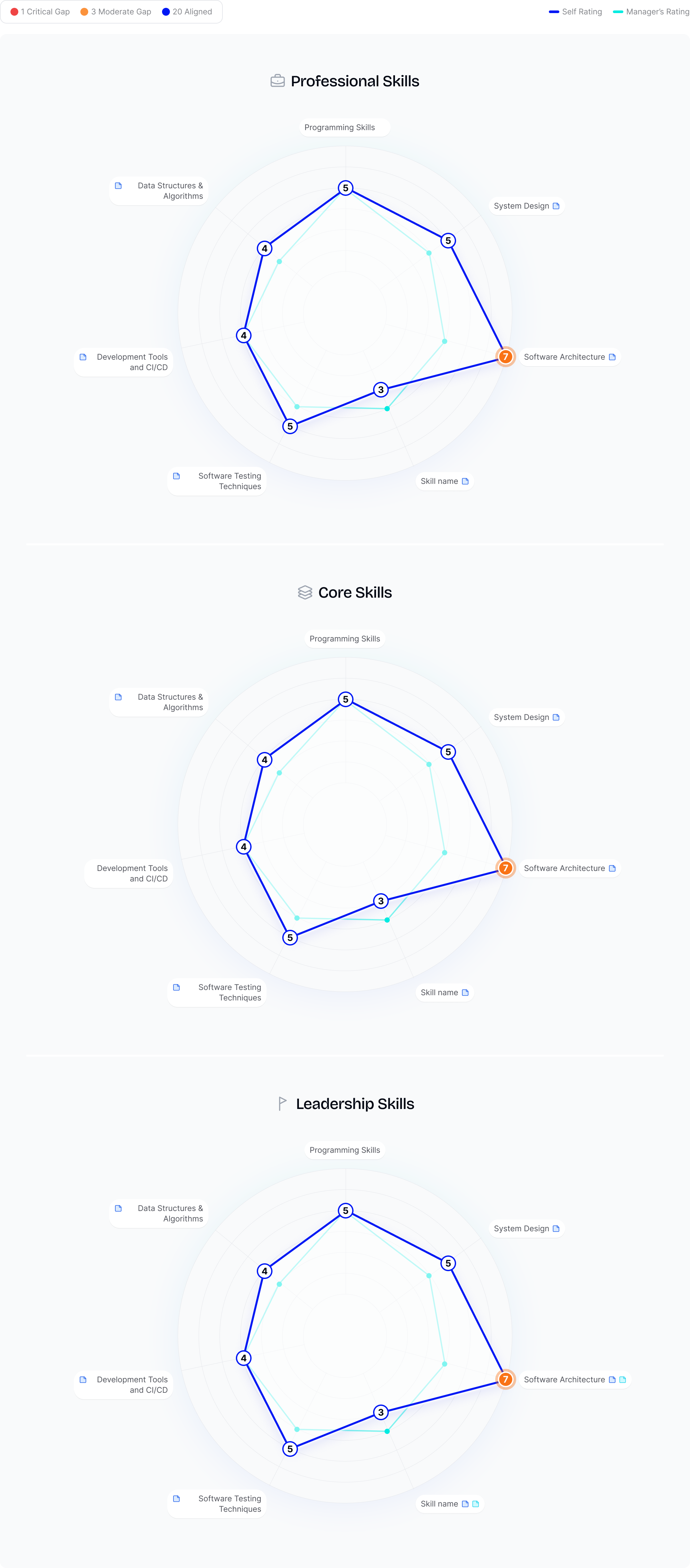 Competency profiles help managers visualize employee strengths and development opportunities.
What evaluation framework are you using?
Competency-based assessments, KPI-based reviews, and 360-degree feedback each serve different purposes.
How will assessment data be used after evaluations are completed?
If the answer is “reporting only,” the organization may not realize the full value of assessment efforts.
Does HR have the resources required to manage the system?
A platform should simplify processes rather than create additional administrative work.
Can the platform connect competency data with employee development initiatives?
The strongest platforms connect assessment results directly to learning, development, and workforce planning.
Checklist: Six Criteria for Choosing an Employee Competency Assessment System
Quick Evaluation Tip: If a platform cannot clearly visualize skill gaps or connect assessments to development plans, it will likely become another reporting tool rather than a workforce planning system.
- Easy to implement
- Includes a competency framework
- Provides intuitive data visualization
- Clearly identifies skill gaps
- Supports career path planning
- Offers organization-level reporting
From Competency Assessment to Talent Intelligence
Competency assessment is only the first step.
In a growing business, leaders need more than performance scores.
They need answers to questions such as:
- Who is ready for a larger role?
- Which capabilities are missing across the organization?
- Does the current workforce support future growth plans?
- Where can internal development replace external hiring?
- Which teams face the greatest capability risks?
This is where competency data becomes operational data.
Organizations stop asking:
“How many points did this employee receive?”
And start asking:
“Is our workforce ready for the next stage of growth?”
Explore Sample Data on SkillMAP
SkillMAP helps organizations visualize workforce capabilities, identify skill gaps, and build data-driven employee development paths.
Rather than focusing solely on assessments, the platform helps organizations uncover hidden potential within their workforce and make better talent decisions.
What You Can See
- Organization-wide competency visibility
- Skill gap dashboards
- Career path insights
- Workforce development priorities
- Succession planning data
👉 Explore Sample Data on SkillMAP
👉 Or speak with the SkillMAP team about Talent Visibility and Talent Development in your organization.
Frequently Asked Questions
What is employee competency assessment software?
It is a tool that helps organizations evaluate, track, and develop employee capabilities using standardized criteria instead of relying on subjective assessments in spreadsheets.
What type of competency assessment software should SMEs choose?
It depends on the organization's needs. Survey tools work for very small companies, HRMS platforms with assessment modules fit organizations already using an HRMS, while specialized competency mapping platforms are better suited for companies that want to turn workforce data into management decisions.
Why is Excel ineffective for competency assessments?
Because results are highly susceptible to bias, including halo effects, recency bias, and personal favoritism. The data also remains disconnected from training plans, workforce planning, and organization-wide skill gap analysis.